

MOE-Tox
Complete Test Overview
Our “MOE-Tox Test” provides a detailed look at your body’s toxic burden, metabolic efficiency, and detox capacity.
With expert insights and a clear path forward, you’ll gain the clarity needed to take control of your mould recovery and overall health.
TAKE CONTROL WITH MOE-TOX - VALUED AT $590
TAKE CONTROL WITH MOE-TOX - VALUED AT $590
Mycotoxins (5 groups)
Toxic Metals (23 markers)
Physiological & Trace Minerals
Environmental Phenols (BPA, nonylphenol, triclosan)
Herbicides (glyphosate, atrazine)
Pesticides (organophosphates, pyrethroids)
PFAS Forever Chemicals
Phthalates & Parabens
Volatile Organic Compounds (benzene, toluene, xylene)
Organic Acids (carbohydrate metabolism, fatty acid oxidation, citric acid cycle function)
B-vitamin & Amino Acid Status
Neurotransmitter Metabolism (dopamine, serotonin, adrenaline pathways, and neuroinflammation markers)
Oxidative DNA Damage
Detoxification Capacity
Bacterial & Yeast/Fungal Dysbiosis
Clostridial Species
Oxalate Metabolites
Nutritional Markers (CoQ10, NAC, B vitamins, vitamin C)
Mitochondrial Function
The MOE-Tox Complete tests for:
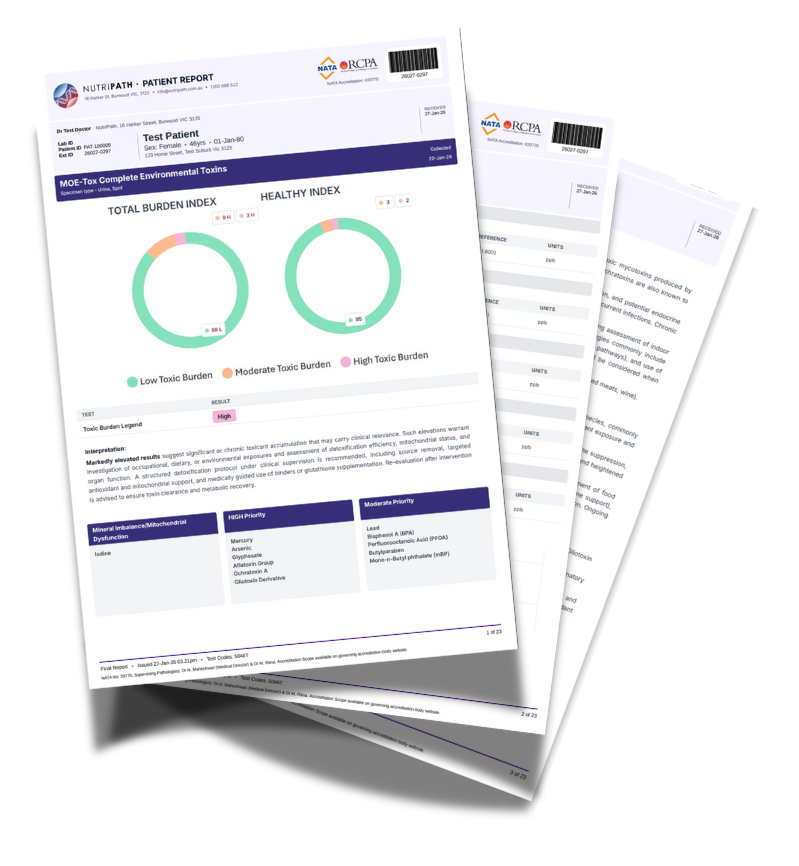
Here's why the MOE-TOX Complete test is particularly valuable for someone with known mould exposure:

While most mould-illness practitioners order a standalone mycotoxin panel, the MOE-Tox captures the full picture of what's actually happening in a mouldaffected body. Mould illness rarely exists in isolation - it creates a cascade of downstream effects, and this single test maps nearly all of them.
It goes far beyond just mycotoxins. ↓
The test covers five major mycotoxin groups (ochratoxins, aflatoxins, trichothecenes, gliotoxins, and zearalenone) with clear thresholds showing whether toxins are present, equivocal, or absent. For mould recovery specifically, this tells you which mycotoxins you're actually dealing with, since each requires slightly different detox strategies. Ochratoxin A, for instance, is kidney-toxic and requires hydration-focused clearance, while aflatoxins hit the liver and need hepatic support.
Mycotoxin detection with clinical context. ↓
People with mould exposure often have impaired detoxification, meaning other environmental toxins accumulate too. The MOE-Tox tests for heavy metals (mercury, lead, arsenic), pesticides, herbicides like glyphosate, PFAS chemicals, phthalates, parabens, BPA, and volatile organic compounds. This matters because mould-sick individuals frequently can't clear these toxins efficiently, and the combined burden is what keeps people stuck. You can't fully recover from mould if you're also carrying a high lead or mercury load that's never been identified.
It reveals the toxic burden mould illness compounds. ↓
This is probably the most underappreciated part of the test for mould patients. Mycotoxins are well-documented mitochondrial poisons, and the organic acids section shows whether the citric acid cycle and fatty acid oxidation pathways are functioning. Elevations in markers like isocitric acid, alpha-ketoglutaric acid, succinic acid, and adipic acid directly reflect the energy production impairment that causes the crushing fatigue mould patients experience. This data lets you target mitochondrial support with the right cofactors (CoQ10, B vitamins, carnitine, magnesium) rather than guessing.
Organic acids reveal mitochondrial damage. ↓
The B-vitamin and amino acid markers show whether methylation is compromised (methylmalonic acid for B12, FIGLU for folate), whether B6 is being depleted by inflammation (xanthurenic acid), and whether detox pathways have the raw materials they need. Mould patients who supplement blindly often miss these specific bottlenecks.
It identifies nutrient deficiencies driving poor recovery. ↓
Mycotoxins disrupt the gut microbiome, and the bacterial dysbiosis and yeast/fungal markers on this test show whether that's happening. Elevated benzoic acid, phenylpropionic acid, or arabinitol can indicate that gut ecology has shifted — which impairs the very detoxification pathways needed to clear mycotoxins. It creates a vicious cycle that this test makes visible.
Gut dysbiosis markers connect mould to the microbiome. ↓
The test checks whether essential minerals are depleted or imbalanced (like the copper-zinc ratio) and whether iodine deficiency is present - both common in chronically unwell mould patients and both relevant to immune function and thyroid health.
Mineral status and iodine. ↓
The 8-OHdG marker specifically measures DNA damage from oxidative stress, giving you objective evidence of how much cellular damage the mould exposure has caused and a measurable benchmark to track recovery against.
Oxidative stress quantification. ↓
Great additions, here are those extra points to weave into the explanation:
Oxalate assessment.
The MOE-Tox includes oxalic acid, glyceric acid, and glycolic acid markers. This is particularly relevant for mould patients because Aspergillus species — one of the most common indoor mould genera — actually produce oxalates as a metabolic byproduct. So mouldexposed individuals can end up with an elevated oxalate burden on top of their mycotoxin load. High oxalates can contribute to joint and muscle pain, kidney stress, and widespread inflammation that gets mistaken for other conditions. Knowing whether oxalates are elevated changes dietary recommendations significantly (reducing high-oxalate foods like spinach, almonds, and sweet potato) and helps explain symptoms that might otherwise seem unrelated to mould. It also means you can monitor whether oxalate levels drop as mould exposure is eliminated and Aspergillus colonisation is addressed.
Neurotransmitter metabolism and neuroinflammation.
The test measures key markers that reflect how dopamine and serotonin pathways are functioning, which is critical because "mould brain" is one of the most debilitating aspects of mould illness. Homovanillic acid (HVA) reflects dopamine turnover, vanilmandelic acid (VMA) reflects noradrenaline/adrenaline metabolism, and 5- hydroxyindoleacetic acid (5-HIAA) reflects serotonin metabolism. These markers show whether the nervous system is in overdrive (elevated VMA suggesting chronic sympathetic activation and stress response) or whether neurotransmitter production is compromised.
Perhaps even more importantly, the test includes kynurenic acid and quinolinic acid - and this is where neuroinflammation becomes visible. When the immune system is activated by mycotoxins, tryptophan (the precursor to serotonin) gets diverted away from serotonin production and down the kynurenine pathway instead. This means less serotonin is being made (contributing to low mood, poor sleep, and anxiety), while simultaneously producing quinolinic acid, which is a potent neurotoxin that drives neuroinflammation. Elevated kynurenic acid on this test is essentially a flag that inflammatory immune activation is stealing tryptophan away from mood-regulating pathways and shunting it toward neuroinflammatory ones.
In short, for a mould recovery program, this test replaces what would otherwise be three or four separate panels (mycotoxins, organic acids, heavy metals, environmental chemicals) and gives you a comprehensive baseline that shows not just what toxins are present, but how the body is coping. It makes the recovery plan targeted rather than generic, and it gives you clear markers to retest and demonstrate progress.
Ready to take control of your health and start your recovery journey?

Sign up for the Mould Recovery Program today and unlock a personalised path to healing for just $1,699.